

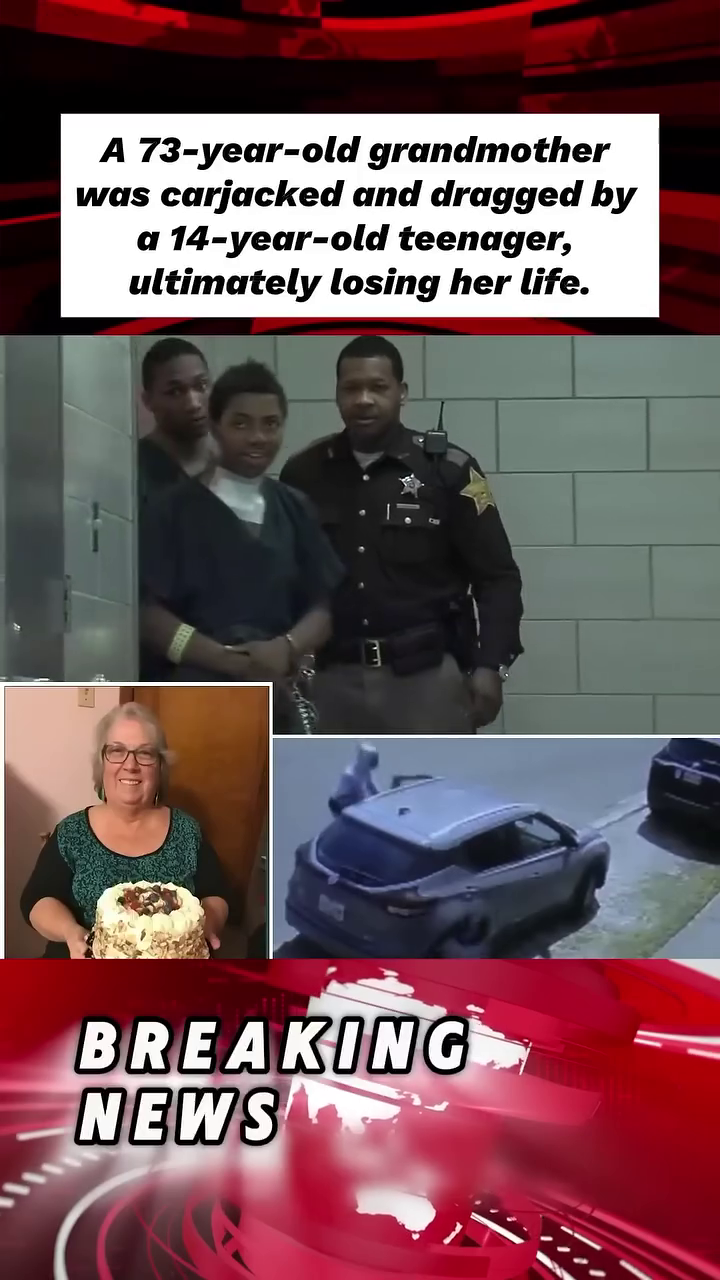
The collective heart of a community aches following a tragedy that saw a beloved 73-year-old grandmother, Linda Affri, lose her life in a violent act of carjacking. The details of the incident are as shocking as they are heartbreaking, casting a harsh light on issues of juvenile crime, community safety, and the contentious debate surrounding the justice system’s response to young offenders.
The event, captured on surveillance video and later released to the public, documents a crime that transitioned from simple theft to vehicular homicide in a matter of terrifying seconds. Linda Affri, a woman by all accounts cherished by her family and community, became the victim of a calculated attack perpetrated by teenagers—one of whom was reportedly only 14 years old.
The Moments Leading to Disaster
The surveillance footage paints a grim picture. Three teenagers are observed loitering, seemingly casing the street for a target. Linda Affri’s silver Nissan SUV appears, and as she sits in the driver’s seat, the group initiates their assault.
The speed and brutality of the attack are deeply disturbing. Two of the teenagers allegedly moved swiftly, forcing open the car doors. The video clip and subsequent reports describe a horrific escalation, where the suspects reportedly used chili spray on the elderly woman’s face—a cruel act intended to incapacitate and disorient her. They followed this with physical violence, punching and kcking the grandmother in a bid to forcefully remove her from the vehicle.
Linda, fighting for her life and her property, struggled against her assailants. Tragically, in the chaos, her seatbelt became entangled with her body. This fateful entanglement would seal her fate in the most agonizing way imaginable.
Dragged to Her Demise
As the suspects managed to gain control of the vehicle and accelerate away, Linda Affri was not yet free. She was dragged for an entire block by her own car, a terrifying ordeal that culminated in a catastrophic outcome. Reports indicate that the force and friction resulted in her arm being severed by the seatbelt, a gruesome injury that points to the sheer violence of the dragging. She passed away instantly at the scene.
The image of a 73-year-old woman suffering such a horrifying end has ignited profound grief and a fierce demand for justice within the local community and across the nation.
The Aftermath and Pursuit of Justice
Following the incident, the three suspects fled the scene, only to be apprehended later. In the subsequent legal proceedings, the age of the offenders—particularly the alleged 14-year-old—has become a central point of contention.
Upon learning of the crime, the families of the young suspects reportedly contacted the police, perhaps overwhelmed by the gravity of what their children had done. The police, in a move to gather public assistance and confirm details, subsequently released the surveillance footage, confirming the terrifying sequence of events.
The case instantly sparked a national conversation about juvenile accountability and the appropriateness of the justice system’s response to violent crimes committed by minors.
A Family’s Heartbreak and Demand for Adult Prosecution
The pain of Linda Affri’s family is palpable. In interviews following the incident, family members expressed deep sorrow, heartbreak, and overwhelming anger. The consensus among the victim’s loved ones is clear: these acts of violence, resulting in the d-th of a loved one, demand the strictest possible penalties.
They are advocating intensely for the suspects to be prosecuted as adults. This demand is rooted in the belief that the heinous nature of the crime—the deliberate carjacking, the use of violence, and the ultimate, fatal consequences—outweighs any consideration of the offenders’ youth. For the family, a crime this severe is not an act of juvenile delinquency but a deliberate, malicious felony that resulted in the klling of their mother and grandmother.
The question of whether a minor should face the adult judicial system for violent acts like vehicular homicide is a complex and deeply emotional one, often pitting the principles of rehabilitation against the need for punitive justice and public safety.
The Complex Debate: Juvenile Justice vs. Adult Accountability
The core of the legal and moral dilemma in this case rests on the concept of transfer or waiver to adult court. In many jurisdictions, laws exist that allow prosecutors to petition a court to try a minor as an adult, especially for serious felonies like murder, armed robbery, or, in this case, a carjacking that resulted in a d-th (vehicular homicide or felony klling).
Arguments for Adult Prosecution
- Severity of the Crime: Proponents argue that the outcome—the klling of an innocent elderly woman—is the primary factor. The violence and disregard for human life demonstrated in the act, regardless of the perpetrator’s age, warrants the highest level of accountability.
- Deterrence: Trying minors as adults for exceptionally violent crimes is often cited as a necessary deterrent for other youth who might contemplate similar acts. The argument is that the threat of a long, adult sentence may prevent future tragic incidents.
- Public Safety: Family members and community advocates believe that adult incarceration is necessary to ensure the suspects are removed from society for a sufficient period to protect the public. They fear that the shorter, rehabilitative sentences of the juvenile system would fail to reflect the severity of the loss.
Arguments for Juvenile System Handling
- Capacity for Rehabilitation: The juvenile justice system is built on the premise that children and teenagers are still developing, both cognitively and emotionally, and therefore have a greater capacity for rehabilitation than adults. Sentencing a minor to decades in an adult prison can be seen as abandoning this potential for change.
- Differences in Brain Development: Scientific research on adolescent brain development supports the argument that impulse control, understanding of long-term consequences, and judgment are not fully formed until well into their 20s. Defense attorneys often leverage this to argue that a minor cannot possess the same level of malice or intent as an adult.
- Harsher Penalties: Adult prisons are often harsher environments, and a minor sentenced as an adult may face lifelong barriers to employment and social reintegration, even after release.
The court in this case will have to weigh these competing philosophies carefully. The decision to try a 14-year-old as an adult for a crime that led to a d-th is one of the most difficult and consequential choices a judge can make.
The Broader Context of Carjacking and Street Crime
This tragic incident is not isolated. Across the country, carjacking has seen an alarming surge, particularly in urban areas. This rise is often attributed to a combination of factors, including:
- Targeting of Older Vehicles: The viral spread of information on how to steal certain makes and models of cars, especially older ones without advanced anti-theft technology, has made them attractive targets for young offenders looking for a thrill or a quick profit.
- Economic Factors: While less of a driver in opportunistic, violent carjackings, broader economic distress can contribute to an overall rise in property and violent crime.
- Lack of Opportunity/Supervision: Sociologists and criminologists often point to systemic issues—such as poor educational opportunities, lack of youth programs, and reduced community support systems—as breeding grounds for juvenile delinquency and gang involvement.
The violent carjacking of Linda Affri underscores a terrifying trend where these crimes are escalating from simple property offenses to acts of extreme violence.
Community Response and Prevention
The response from the community has been one of both mourning and mobilization. Calls for increased police presence, better surveillance systems, and—crucially—more effective youth intervention programs have grown louder.
- Targeted Youth Intervention: Experts suggest that investing in programs that divert young people from crime is a long-term solution. These include after-school programs, mentorship, and educational initiatives that address the root causes of anti-social behavior.
- Enhanced Security: For community members, personal safety measures have become paramount. This includes increased vigilance, avoiding distractions like cell phones while entering or exiting a vehicle, and being aware of one’s surroundings at all times.
A Call for Reflection and Action
Linda Affri’s d-th is a profound tragedy—a stark reminder of the vulnerability of the elderly and the potential for devastating violence at the hands of those who are themselves still children. The debate over whether to prosecute her alleged kllers as adults is more than a legal argument; it is a moral reckoning for a society grappling with how to hold young offenders accountable for adult crimes without entirely foreclosing the possibility of redemption.
While the courts navigate the complexities of this horrific case, the community mourns a life brutally taken and searches for answers that might prevent another senseless loss on its streets. The outcome of the legal proceedings will undoubtedly set a significant precedent for how the justice system balances punishment, rehabilitation, and the overwhelming need for justice for victims like Linda Affri and her grieving family. The memory of the 73-year-old grandmother, lost in a savage act of selfishness, will drive the ongoing conversation about community safety and juvenile accountability for years to come.