

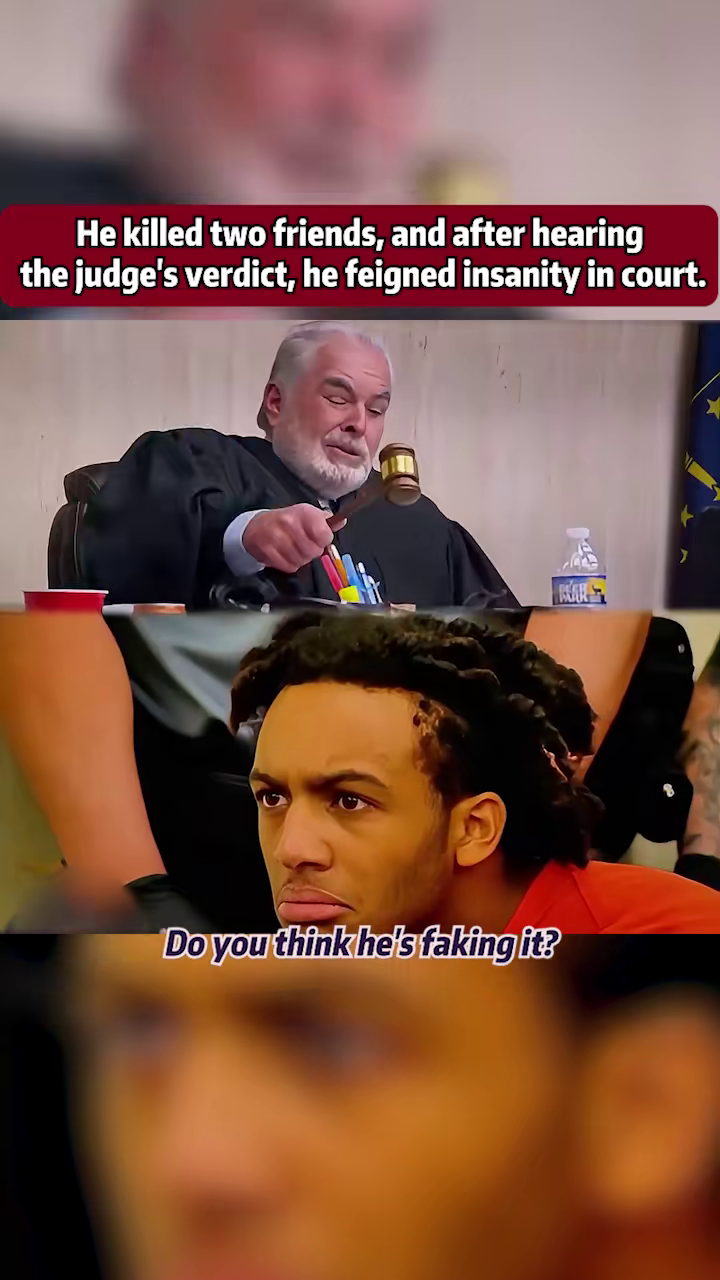
The atmosphere in a courtroom is usually one of solemn silence and strict order. However, in the trial of Anderson Kemp (identified in reports as Montcamp/Kemp), that silence was shattered by a display of behavior that left the gallery, the jury, and the internet divided. Was this a man suffering from a severe mental breakdown, or was it a calculated performance designed to escape the consequences of a brutal double crime?
The case involves the tragic loss of two young men, Trey Inman and Jordan Paney, and a betrayal of friendship that ended in violence. But it was the defendant’s reaction to his sentencing—wild screaming, invoking God, and chaotic body language—that turned this case into a viral subject of debate regarding justice, mental health, and the lengths criminals will go to avoid prison.
The Night of the Tragedy
The timeline of this harrowing event dates back to December 7, 2023. The initial call to the police did not come from a witness inside the apartment, but rather from a chaotic scene in a parking lot.
Police received reports of a man acting erratically outside an apartment complex. When officers arrived at the scene, they found a 19-year-old male, later identified as the suspect, soaking wet and running frantically through the parking lot. According to police reports and bodycam footage later referenced in court, the man was shouting a chilling confession into the night air:
“I kll*d my friends! I kll*d my friends!”
The behavior was manic and disturbing. The suspect appeared distraught, wet, and disoriented. However, this initial confession led law enforcement to investigate the apartment the man had come from. What they found inside was a scene of devastation that contradicted the erratic, almost sympathetic figure running in the parking lot.
The Discovery Inside
Approximately 15 hours after the initial encounter in the parking lot, police made a grim discovery inside the suspect’s apartment. Two bodies were found.
The victims were identified as 19-year-old Trey Inman and his friend, Jordan Paney, a French national. Both young men had been sh*t multiple times. The brutality of the crime scene suggested a violent, rage-fueled attack rather than an accident or self-defense.
As investigators pieced together the relationship between the suspect and the victims, a heartbreaking narrative of generosity and betrayal emerged. Trey Inman was not just a casual acquaintance of the suspect; he was a benefactor. Evidence presented during the investigation revealed that Trey had invited the suspect to live in his apartment rent-free.
Trey had offered his home as a sanctuary for a friend in need. In return, investigators determined that an argument—likely trivial in nature compared to the outcome—spiraled into a “fit of rage.” The suspect, abusing the hospitality offered to him, turned on his hosts. The prosecution argued that this was not a crime of insanity, but a crime of entitlement, anger, and robbery, leading to charges of home invasion, robbery, and two counts of m*rder.
The Defense: A Plea of Instability
During the trial, the defense attorney faced an uphill battle. With a confession shouted in a parking lot and physical evidence linking the suspect to the crime, the strategy shifted toward the defendant’s mental state.
The defense argued that Kemp was mentally unstable at the time of the crime. They painted a picture of a young man who had lost his grip on reality, suggesting that the violence was a product of a shattered mind rather than a malicious heart. The goal was to secure a reduced sentence or a verdict that prioritized psychiatric help over incarceration.
Throughout the proceedings, the defendant’s behavior seemed to align with this narrative. He appeared disheveled, making odd facial expressions, and often seemed detached from the gravity of the situation. However, to the prosecution and the judge, this behavior appeared convenient—a performance that began only when the walls of justice started closing in.
The Verdict and The Outburst
The climax of the trial came when the judge prepared to read the sentence. The court had heard the arguments regarding mental illness, but the evidence of the violent act and the betrayal of the victims weighed heavily against the defense.
The judge remained unconvinced by the “insanity” narrative. In a crushing blow to the defense’s strategy, the judge sentenced the man to life in prison.
It was at this precise moment that the courtroom descended into chaos. Upon realizing that his potential “get out of jail free” card had failed, the defendant erupted.
Video footage from the courtroom shows the man throwing his head back, his face contorted in an exaggerated scream. He yelled, “God! God!” and thrashed in his seat, his eyes widening wildly. To an untrained eye, it looked like a breakdown. To those familiar with the justice system, and specifically to the judge presiding over the case, it looked like a last-ditch effort to manipulate the court.
The judge was not swayed. In a statement that cut through the noise of the defendant’s screaming, the judge noted the suspect’s demeanor prior to this moment. The judge remarked on how the defendant’s face had been “shattered” and “expressionless” previously, implying that the sudden explosion of emotion was a facade.
“Do You Think He’s Faking It?”
The footage of the sentencing has sparked a massive conversation online. Viewers watch the transition from a stoic defendant to a screaming, writhing figure the moment “life in prison” is mentioned.
Psychologists and criminologists often note that true insanity or psychosis rarely manifests solely at the moment of sentencing. Genuine mental health crises tend to follow consistent patterns, whereas malingering (the fabrication of symptoms for secondary gain, like avoiding prison) often appears dramatic and perfectly timed with negative outcomes.
The key factors that worked against the defendant included:
-
The coherence of the crime: He had the presence of mind to flee the scene.
-
The motive: The violence stemmed from an argument and resulted in robbery, suggesting a cognitive understanding of cause and effect.
-
The timing: The “instability” peaked exactly when consequences were delivered.
A Betrayal of Trust
Beyond the courtroom theatrics, the core of this story is a devastating loss of life. Trey Inman and Jordan Paney were young men with their whole lives ahead of them. Jordan, a French national, was far from home, visiting or living in a country where he met a tragic end. Trey was described as a supportive friend, the kind of person who would open his door to someone who had nowhere else to go.
The tragedy serves as a dark reminder of the unpredictability of human behavior. The act of letting someone into your home is an act of trust. In this case, that trust was met with the ultimate violation.
The Aftermath
The judge’s decision to impose a life sentence ensures that the defendant will not be able to harm anyone else. The dismissal of the mental illness plea sends a strong message that the court system is adept at distinguishing between genuine psychiatric struggles and calculated attempts to evade justice.
While the defendant screamed and yelled, hoping to create a spectacle that might save him, the court focused on the silence of the two victims who could no longer speak for themselves. The “insanity” defense is a vital part of the legal system designed to protect those who genuinely cannot distinguish right from wrong, but when it is abused by those who simply refuse to accept the consequences of their rage, justice demands a harsh response.
The young man who was found soaking wet in a parking lot, confessing to his crime, will now spend the rest of his days in a dry cell, with a lifetime to reflect on the friends he betrayed.