

The Heart-Wrenching Case of a Father’s Ultimate Betrayal
The courtroom, often a stage for solemn judgment, recently became the setting for the final, gut-wrenching details of a crime that shocked the nation. The case involves an Ohio man, Chad Doerman, who meticulously planned and carried out the klling of his three young sons, a betrayal of fatherhood so profound it defies comprehension. As the prosecutor laid bare the harrowing sequence of events, a portrait of calculated cruelty emerged, leaving all those present—and those following the story—in a state of disbelief and sorrow.
This article delves into the tragic narrative, exploring the shocking details revealed during the sentencing hearing, the background that led to the atrocity, and the final judgment that ensures this monster will never again walk free.
The Day Everything Changed: A Mother’s Worst Nightmare
The horrific events unfolded on a day that began like any other for the family in Monroe Township, Ohio. The victims were three innocent boys: a seven-year-old, a four-year-old, and a three-year-old, full of life and promise.
The narrative presented by the prosecutor painted a picture of a man whose behavior had become increasingly erratic and alarming in the days leading up to the kllings. It was revealed that Chad Doerman had been walking around the home with a Bible, an act that ironically did little to comfort his family and instead fueled the concern of his wife.
Sensing the growing unease, the boys’ mother, fearing for their safety, decided to take her sons for a nap, perhaps hoping to diffuse a tension she couldn’t yet articulate. This simple act of maternal protection, however, could not save them from the horror that was about to unfold.
The Calculated Atrocity: A Cold and Deliberate Plan
The prosecutor detailed how Doerman did not act in a moment of uncontrollable rage, but rather with a chilling and deliberate plan. While the mother and children were resting, Doerman retrieved a rifle from a safe—a weapon he had deliberately obtained and staged for his heinous purpose.
The first victim was the four-year-old son, Hunter. Doerman is said to have shot him multiple times. The sound of the gunfire shattered the silence of the afternoon, instantly alerting the rest of the family to the impending danger.
What followed was a terrifying scramble for survival.
“He hunted down his three sons like animals,” the prosecutor stated, conveying the brutality of the man’s pursuit.
The terrified mother, in a desperate attempt to save her remaining children, screamed for them to run. The eldest, a stepdaughter, instinctively grabbed seven-year-old Clay and fled the house, running for her life and his.
Chad Doerman, driven by a perverse and dark intention, pursued them. He chased them down in the yard and fired at Clay, who fell to the ground. In a gruesome act of finality, Doerman walked up to the downed boy and shot him again in the head as he lay there, helpless and injured.
The stepdaughter, witnessing the nightmare unfold before her, became an unwilling witness to the ultimate act of cruelty. Yet, in her terror, she managed to escape and call for help, a desperate, valiant act that ultimately saved her own life and provided critical evidence for the prosecution.
The Mother’s Agony and the Final Victims
Inside the house, the mother faced her own living hell. Amidst the chaos, she was desperately trying to tend to the first victim, Hunter, attempting to save his life. It was at this moment, described chillingly by the prosecutor, that Doerman, “like a demon,” re-entered the room.
The mother physically struggled with him, a final, ferocious attempt to protect her child and herself. But the struggle was short-lived. In the culmination of his evil act, Doerman kllled Hunter and the three-year-old son, Chase, ending the lives of all three of his biological children.
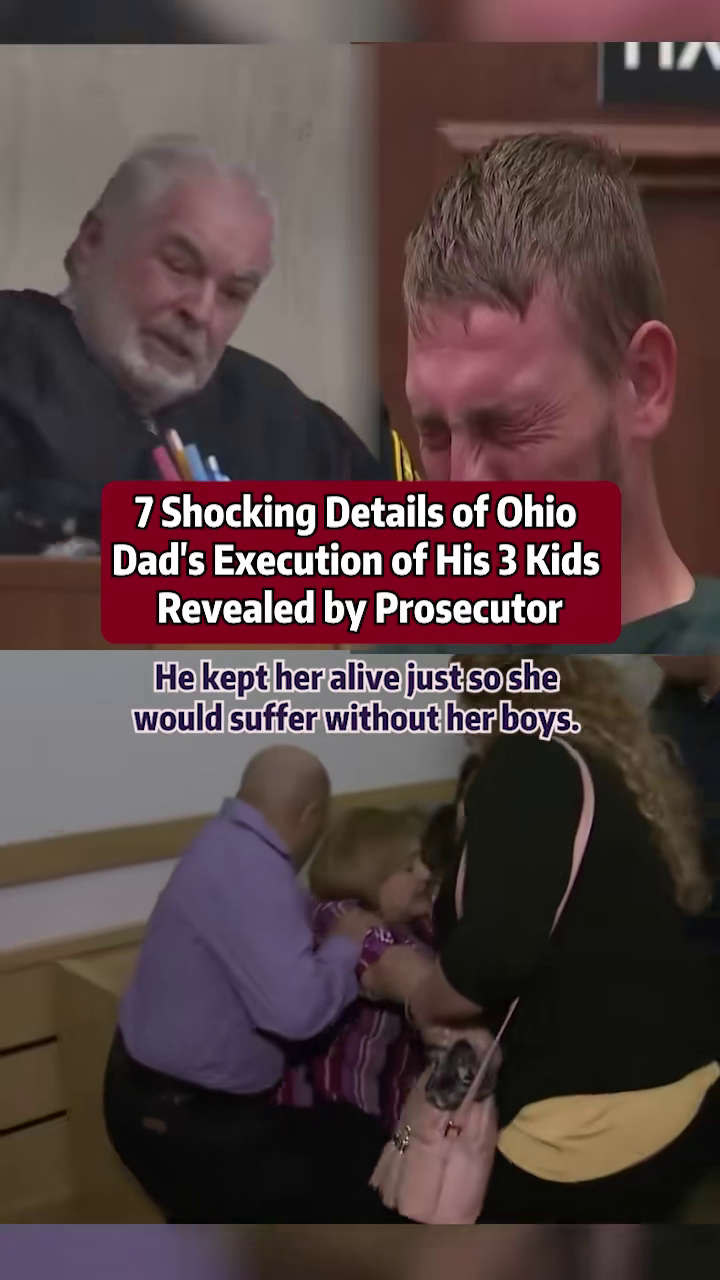
The most shocking detail revealed in the courtroom was not just the act of the klling itself, but the stated motive behind leaving the mother alive. The prosecutor revealed the father’s sickening intention: “He kept her alive just so she would suffer without her boys.” This statement confirmed the depraved nature of the crime—an act of emotional torture designed to inflict the maximum possible, lifelong pain on the woman who loved those children.
The Legal Process and the Search for Justice
Following the horrific events, a massive police response descended upon the small, quiet community of Monroe Township. Chad Doerman was apprehended and arrested, setting the stage for one of the most closely watched trials in recent Ohio history.
Given the gravity and undeniable evidence of the crimes, Doerman faced multiple counts of aggravated klling. The prosecution initially pursued the death penalty, a sentence many felt was justly deserved for the annihilation of three innocent lives.
However, in a move that sometimes occurs in high-profile cases, Doerman entered a plea deal. He pleaded guilty to all charges, including three counts of aggravated klling, two counts of kidnapping, and one count of attempted klling of the stepdaughter. By pleading guilty, he spared the victims’ family, the witnesses, and the community the further trauma of a long and detailed trial.
Sentencing: Life in Prison without Parole
The culmination of the legal process was the sentencing hearing, the event where the prosecutor shared the shocking details that brought the full scope of the tragedy into the light. The images of the boys—smiling, bright, and innocent—were juxtaposed with the stone-faced reality of their father’s betrayal.
During the sentencing, the judge delivered a powerful and unequivocal condemnation. Addressing the father, the judge stated:
“You will go to prison for the rest of your life. That means you will d there. That’s what I’m tempted to do.”
In the end, Chad Doerman was sentenced to life in prison without the possibility of parole. This sentence ensures that he will spend the remainder of his days behind bars, stripped of freedom, and forever marked by the horrific legacy of his actions. The “no chance of parole” stipulation is a critical element, providing a measure of certainty and finality for the heartbroken survivors and the community.
The Courtroom Tears and the Question of Remorse
The sentencing hearing included emotionally charged moments. Doerman was captured on camera crying during the proceedings. While some might interpret these tears as remorse, the prosecutor’s detailing of the calculated nature of the crimes, and the expressed motive of wanting the mother to suffer, casts a long shadow of doubt over any genuine repentance.
For many observers, his tears were seen as a reaction to his own lost future, not an acknowledgment of the unimaginable pain he inflicted upon his family. The judge’s comment, and the community’s sentiment, suggested that no amount of tears or regret could ever atone for the lives he extinguished.
A Community Mourns: Rest in Peace, Three Sons
The ultimate victims in this tragedy are the three young boys. Their short lives, filled with the simple joys of childhood, were violently cut short by the person they should have been able to trust most. The loss has reverberated far beyond the walls of the courtroom, impacting an entire community left to grapple with how such darkness could exist.
Memorials sprung up near the family home, with flowers and small tokens marking the spot where three lives ended and one mother’s life changed forever. The public outpouring of grief underscored the fact that these were not just statistics, but beloved sons, grandsons, and friends.
The Broader Discussion on Domestic Violence and Child Safety
This horrifying case inevitably sparks a crucial societal discussion about domestic violence, mental health, and the signs that often precede such catastrophic events.
-
Recognizing Warning Signs: The mother’s concern about her husband’s behavior was the first sign. It is a stark reminder that any drastic change in behavior, especially when coupled with the presence of weapons or threats, must be taken seriously.
-
The Importance of Intervention: While hindsight is always clearer, this case highlights the systemic need for effective intervention strategies in cases of domestic conflict and potential danger to children.
-
Support for Survivors: The mother is now a lifelong survivor of a devastating atrocity. Her journey of healing will be immeasurably difficult, underscoring the vital role of long-term psychological and community support for survivors of such intense trauma.
The sentence of life in prison offers a form of justice, but it can never restore the lives that were taken. The three sons, full of laughter and potential, are gone. Their memory, however, remains a powerful force for all those who seek to understand, prevent, and protect against the darkness of domestic tragedy.
Final Thoughts: The case of Chad Doerman is a painful testament to the fact that evil can wear the mask of family. His calculated cruelty, aimed at inflicting maximum pain on his wife by eliminating their sons, will forever define his life and the lives he brutally ended. As the legal chapter closes, the community is left to mourn, to reflect, and to ensure the three young boys rest in peace.