

The world of true crime is often characterized by stories that defy understanding, leaving the public struggling to reconcile the brutality of the acts with the humanity of the perpetrators. Few cases have gripped the collective consciousness with the same degree of shock and horror as the events surrounding the fate of Wendy and Randall Bjorga, whose lives were tragically ended by their own granddaughter, Cassandra Bjorga, and her boyfriend, Johnny Ryder. This case is not merely a chronicle of two lives taken, but a profound and disturbing examination of youth, malice, and an unprecedented level of depravity. The ensuing legal proceedings and the final verdict handed down to the teenage couple have sparked intense debate, forcing us to confront difficult questions about justice, accountability, and the possibility of redemption for those who commit the most heinous of crimes.
A Disturbing Sequence of Events
The nightmare began on April 8th, when 19-year-old Johnny Ryder and 17-year-old Cassandra Bjorga carried out a meticulously planned and shockingly brutal act. The victims, Cassandra’s 63-year-old grandparents, Wendy and Randall Bjorga, were their caretaker and guardians. The exact details of the attack remain shielded from extensive public narrative, but the results were catastrophic, leaving the beloved couple deceased.
What followed, however, transcended the initial tragedy into a realm of the truly macabre. Rather than fleeing or seeking to conceal their actions in a conventional manner, the couple chose a path of chilling disrespect toward the dead. The video recounts that the bodies were sealed within a bedroom using grout, an action that speaks to a premeditated attempt at concealment while still remaining on the premises.
For a full week, the two teenagers continued to live in the house alongside the sealed room containing the remains of Cassandra’s grandparents. Reports indicate that their behavior during this period was disturbingly nonchalant. They reportedly stopped attending school, ignored all contact and inquiries from other family members, and, most horrifyingly, hosted a party in the house’s living room. This detail, of actively socializing and celebrating mere feet from the bodies of those they had harmed, offers a stark and terrifying glimpse into a profound lack of empathy or moral compass.
The grotesque nature of their actions began to unravel when neighbors or guests noticed a foul odor emanating from the house. When questioned by party-goers, the couple allegedly dismissed the smell by claiming it was merely a “pipe problem.” This casual deception underscores the cold-blooded composure they maintained throughout their week-long cover-up.
The Investigation and Arrest
The true extent of the situation was exposed when the police conducted a welfare check at the residence. The concern from their ignored family members, and perhaps the mounting suspicion from the community, prompted law enforcement to investigate. The discovery of the sealed bedroom and the bodies within brought the week of terror to a close.
By the time the authorities made their discovery, the teenagers had already fled the scene. A widespread manhunt was launched, and investigators quickly realized the sheer audacity and extent of the couple’s plans. Disturbing information emerged that Johnny and Cassandra had formulated a detailed scheme, not only for the initial act but also for potential further actions. Authorities stated that other family members, including Johnny’s sister and Cassandra’s mother, were on a so-called “list,” suggesting their malicious intentions may have extended beyond the grandparents.
After a two-hour search, the pair were finally apprehended while hiding in a nearby apartment. Their arrest marked the beginning of a complex and highly scrutinized legal battle. The police stated that the teenagers had thoroughly studied ways to evade justice, confirming the calculated nature of their entire scheme.
The Legal Process and Sentencing
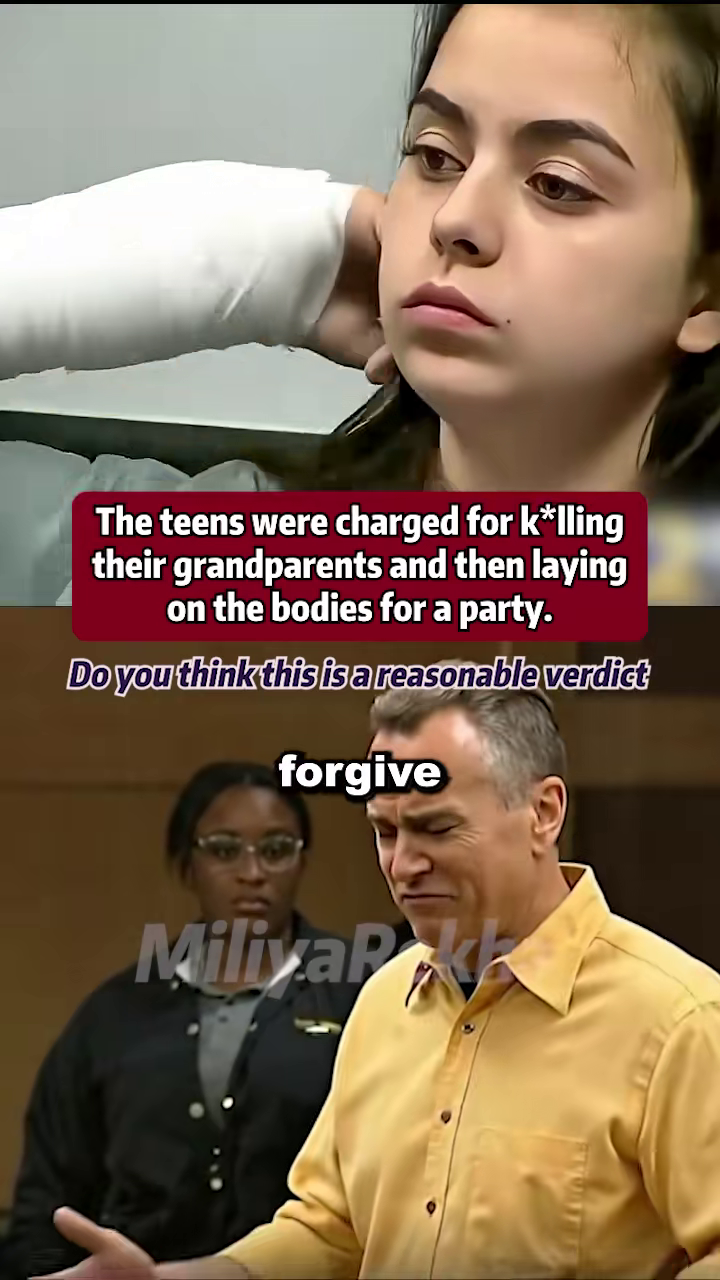
The gravity of the charges—first-degree murder—left little doubt about the potential consequences for the two teenagers. The case brought forth a whirlwind of public and media attention, driven by the sheer depravity of their actions and the lack of remorse they appeared to demonstrate. The video highlights a chilling moment in the courtroom where a man, presumably a relative of the victims, expresses his profound sorrow and anger, lamenting that he “can’t forgive” the individual he “raised.” This deeply emotional testimonial underscored the human cost of the crime.
In a move that surprised some, both Johnny Ryder and Cassandra Bjorga ultimately pleaded guilty to the charges. This decision was reportedly made to avoid the lengthy and highly public spectacle of a full trial. While a guilty plea often suggests cooperation or regret, in this context, it was perhaps a pragmatic step to control the narrative and expedite the legal conclusion.
The sentencing phase was where the court delivered its powerful message regarding the severity of the crime. Both teenagers were sentenced to life imprisonment. However, the judge stipulated a particularly stringent condition: they would not be eligible for parole until they had served a full 60 years behind bars.
Analyzing the 60-Year Verdict
The sentence of life imprisonment with a minimum of 60 years before parole eligibility is an extremely severe judgment, especially for offenders who were still teenagers at the time of the crime. This kind of sentencing reflects several critical considerations by the court:
- The Heinous Nature of the Crime: The decision to not only take the lives of the victims but to disrespect their memory by hosting a party in the same house demonstrates a level of moral corruption that judges rarely see. The prolonged cover-up, the calculated deception, and the total lack of humanity were likely primary factors in the harshness of the sentence.
- Lack of Remorse: The video explicitly states that the couple “showed no remorse in court.” The entire sequence of events, from the sealing of the room to the attempted escape and the pre-existing “list” of other targets, points to a cold, unfeeling approach to their actions. The court, therefore, would have determined that the offenders were not candidates for leniency or quick rehabilitation.
- Deterrence and Protection of the Public: Sentencing in such high-profile, shocking cases is also intended to deter others. By ensuring the perpetrators will spend the vast majority of their lives incarcerated, the court sends a clear message about the zero-tolerance policy for such acts of familial violence and depravity. Furthermore, the authorities’ fear that they may have planned future acts justified a sentence that ensures the protection of the public for a significant duration.
- The Impact on the Victims’ Family: The sentence provides a measure of justice for the surviving family members of Wendy and Randall Bjorga. While no verdict can restore the lives that were lost, a 60-year minimum ensures that the offenders will be held accountable for the profound, intergenerational trauma they inflicted.
The possibility of parole after 60 years means the couple, if they survive that long, could potentially be released in their late seventies or early eighties. Given the average lifespan, the sentence is, in all practical terms, a life sentence, ensuring they spend their adulthood and most of their elder years incarcerated.
Final Thoughts on Justice
The case of Johnny Ryder and Cassandra Bjorga stands as a chilling reminder of the dark potential that can manifest in individuals, regardless of their age. The sheer cruelty of their actions, from the initial act of klling to the subsequent week-long party, horrified the nation.
The court’s final verdict of life imprisonment with a stringent 60-year minimum parole eligibility reflects the gravity of their offenses. It is a judgment that balances the legal concepts of punishment, public safety, and deterrence. For the family of Wendy and Randall Bjorga, the sentence offers a conclusion to a harrowing chapter, though the memory of their loss will undoubtedly remain. This case will continue to be a subject of intense discussion, not only for the shocking details of the crime but for the weighty ethical and judicial questions posed by the chilling lack of empathy displayed by the teenage perpetrators. The sentence is a statement that some actions are so egregious that they forfeit the privilege of early freedom, cementing this case as a landmark example of cold-blooded adolescent malice meeting the full force of judicial severity.