

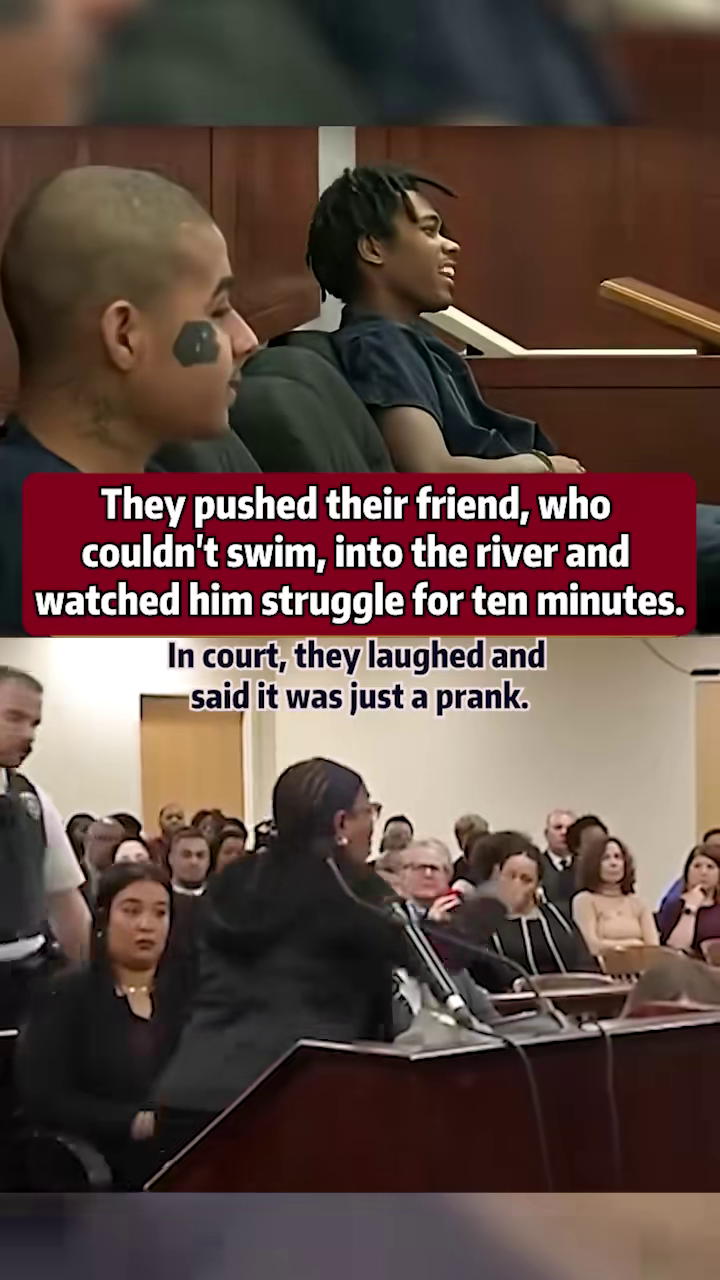
The line between a harmless joke and a catastrophic, irreversible act is often clearer in hindsight, but for one Louisiana man and his family, that line was brutally crossed in a moment of shocking indifference and negligence. The heart-wrenching story of Christopher Gilbert, a 26-year-old whose life was forever altered by his companions, has sent shockwaves across the nation, forcing a difficult conversation about responsibility, bystander inaction, and the definition of justice.
The incident, which occurred by a lake in Louisiana, was reportedly captured on surveillance footage and involved Christopher, who had just celebrated a major life milestone, and a group of individuals he considered friends. The events that unfolded tragically stripped away Christopher’s future, leaving him clinging to life and raising profound questions about the moral and legal consequences of malicious and negligent actions.
The Day That Changed Everything
Christopher Gilbert, a vibrant 26-year-old, was on a day that should have been filled with hope and celebration. The circumstances leading up to the tragedy highlight a devastating betrayal of trust. The video evidence and eyewitness testimony presented in court painted a grim picture: Christopher was pushed into the lake by one of his companions.
Crucially, it was established that Christopher could not swim—a fact that, according to reports, was known to the people he was with. What followed was a horrifying ten-minute ordeal that speaks volumes about the failure of compassion and the devastating potential of negligence.
Ten Minutes of Indifference
For ten agonizing minutes, Christopher struggled in the water. This was not a quick accident; it was an extended period where a life hung in the balance, and the people closest to him reportedly stood by and watched. The surveillance video and subsequent testimony revealed that no immediate action was taken by his group to help him out of the water.
This act of non-intervention, of watching a person you know and care about fight for air, is perhaps the most shocking aspect of the entire case. Every second Christopher spent under the surface, or thrashing to stay afloat, was a moment that could have been changed by a single intervention. Instead, the video footage suggests a chilling indifference from those who had created the immediate danger.
The prolonged lack of oxygen to the brain resulted in catastrophic and irreversible harm. The consequences of that ten-minute lapse in human empathy were devastating, demonstrating that actions, and the deliberate lack thereof, carry weight far beyond the initial push.
The Rescue and the Aftermath
It was not Christopher’s companions but customers from a nearby restaurant who ultimately intervened. Alerted by cries for help—likely Christopher’s final, desperate attempt or the shouts of other concerned onlookers—these good Samaritans rushed to the scene. Their heroic, yet delayed, efforts managed to pull Christopher out of the water and onto the shore.
Christopher was immediately taken to the hospital, where the full extent of the tragedy became apparent. Doctors declared him brain dead. His organs, starved of oxygen, began failing rapidly. The medical team embarked on a challenging, 72-hour rescue effort, placing him on a ventilator and employing every measure to stabilize him.
While they managed to keep him alive, the damage was too severe to fully reverse. Today, Christopher’s condition remains tragic: he is unable to speak, his lung function is reportedly at only 20%, and he remains fully dependent on life support, sustained by machinery. The playful push, described by his companions, had essentially imprisoned Christopher within his own body.
‘Just a Joke’: The Courtroom Stance
The subsequent legal proceedings brought the individuals involved before the court, where their behavior added another layer of outrage to the tragedy. The video footage from the courtroom showed two of the young men allegedly involved, seen laughing and smiling. This perceived lack of remorse, a stark contrast to the grief and permanent suffering inflicted, fueled public indignation.
In their defense, the primary argument put forth by the involved individuals was that the entire incident was “just a prank” or “just a joke.” This assertion attempted to trivialize a near-fatal act of negligence. The court, however, was tasked with separating youthful folly from criminal liability.
The claim that it was merely a prank failed to account for the core elements of the crime: the knowledge that Christopher couldn’t swim, the deliberate act of pushing him into the water, and the subsequent, prolonged failure to render aid while he struggled. This combination of factors transformed a simple, ill-conceived joke into a serious criminal offense.
The Legal Ramifications and Sentencing
The legal process sought accountability for the serious harm inflicted upon Christopher. While the court was not able to pursue charges related to a completed killing, the charges centered on the severe and lasting bodily injury he sustained.
The key individual responsible for pushing Christopher was eventually sentenced to imprisonment. The charges were not for a minor offense but for:
Aggravated Battery: This suggests a battery (an offensive or harmful physical contact) committed with circumstances that made it more severe, such as the use of a mechanism (the water) that caused serious bodily harm, or the surrounding circumstances of malice and negligence.
Serious Negligent Injury: This charge directly addresses the failure to exercise reasonable care (negligence) that resulted in Christopher’s permanent, life-altering injuries. The knowledge of his inability to swim exponentially increased the level of negligence.
The sentence reflects the gravity of the court’s finding: that the act went far beyond a harmless joke. It was a criminal act of violence and profound neglect that resulted in a permanent physical sentence for the victim. The court’s decision serves as a solemn warning that a reckless disregard for another person’s safety, particularly when a known vulnerability exists, carries severe and life-altering consequences for both the victim and the perpetrator.
The Conversation on Bystander Effect and Moral Duty
The tragedy of Christopher Gilbert has ignited a broader discussion on the concept of the Bystander Effect, a social psychological phenomenon where individuals are less likely to offer help to a victim when other people are present. While the friends had a higher moral and social duty than mere strangers, their collective inaction illustrates how group dynamics can lead to a diffusion of responsibility, even in a life-or-death situation.
In this scenario, however, the negligence was compounded by the fact that they initiated the danger. Their duty was active—to immediately reverse their harmful action. Their failure to do so, combined with their post-incident laughter, suggests a deep-seated ethical void and a complete disregard for Christopher’s well-being.
The intervention of the restaurant patrons underscores the power of decisive action. They were strangers who recognized a crisis and acted immediately, demonstrating the moral imperative to help someone in distress, irrespective of personal relationship.
A Plea for Empathy and Accountability
The life of Christopher Gilbert has become a stark reminder that words like “prank” or “joke” cannot be used to excuse criminal negligence and the profound harm it causes. His story forces every individual to contemplate their moral compass, their responsibility to their companions, and the importance of empathy.
The legal system has delivered a verdict of accountability, but for Christopher and his family, the sentence is ongoing. They are now caregivers for a loved one whose full life was stolen in a single, careless moment. The verdict, while bringing a measure of justice, can never fully restore what was taken. The tragedy demands that we move beyond viewing such acts as isolated incidents and recognize them as failures of basic human responsibility.
Christopher Gilbert’s story is a call to action—a plea for greater awareness, for deeper empathy, and for an unwavering commitment to safety and responsibility among friends.